
中国最强音(全文在线阅读)>
中国最强音Multiple Chinese universities raise gaokao score requirements for arts admissions_我的网站
一 | 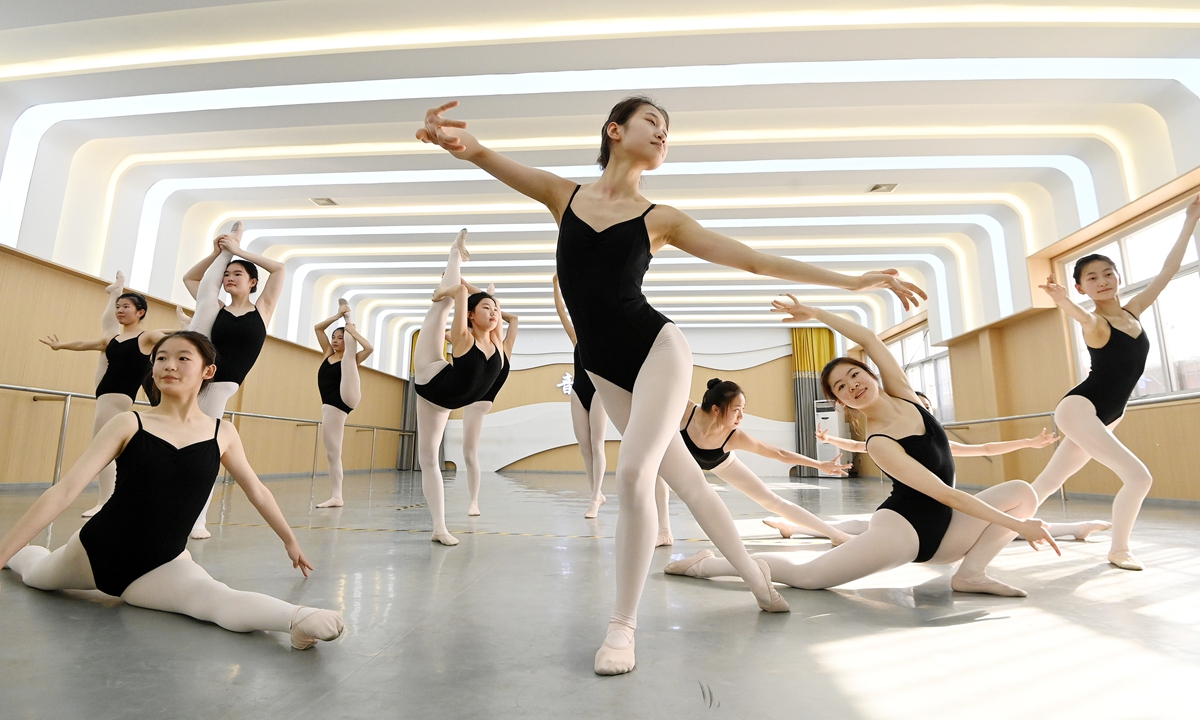 Even during summer break, changes to the admissions policy at the Communication University of China (CUC) have sparked heated discussions among students, with the reform becoming a hot topic on campus and on social media. Amid heated debate over China's top media and arts school's admission reform, eight majors, including radio and television directing and theater directing, will no longer require separate arts exams and will instead admit students based solely on gaokao (the national college entrance exam) scores starting next year. China's art college entrance examination, known as yikao, is a special admission pathway for students applying to arts-related majors. Applicants take both the gaokao and professional tests in areas such as fine arts, music, dance, acting, broadcasting and directing. Compared with many other university programs, art majors have traditionally placed less emphasis on gaokao scores and more on candidates' professional abilities and artistic potential. "As one of China's most influential universities for media education, CUC's reform is seen as having broader implications," Xiong Bingqi, president of the 21st Century Education Research Institute and vice president of the China Association of College Newspapers, told the Global Times. In his view, future arts admissions are likely to place greater emphasis on students' cultural literacy, professional interests and long-term potential. 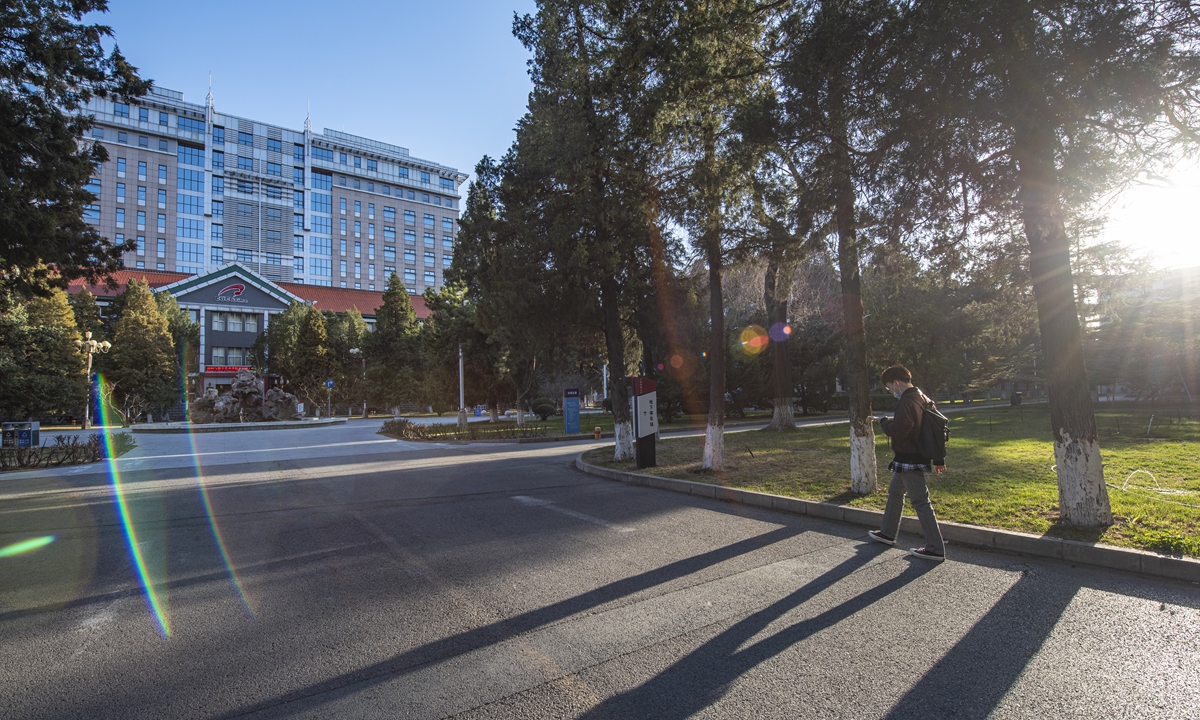 Beyond the 'shortcut' CUC's move reflects a broader trend among Chinese arts universities. In recent years, institutions such as Nanjing University of the Arts and Henan Academy of Fine Arts have reduced the number of majors requiring school-based exams on their specific art subjects, placing greater emphasis on academic performance and provincial-level arts examinations. The changes reflect a broader trend in China's arts education admissions system, where universities have increasingly emphasized students' cultural foundation alongside their artistic abilities. "CUC's latest adjustment reflects a broader trend in arts education reform, with some arts-related majors beginning to admit students based on their gaokao scores rather than separate professional examinations," Xiong told the Global Times. According to Xiong, one of the key goals of the reform is to address the utilitarian mindset among some students and parents who view arts admissions as a "shortcut to college." In the past, some arts programs had relatively lower requirements for cultural scores, prompting some students with weaker academic performance to turn to arts exams and enroll in professional training programs during high school. As a result, arts admissions were sometimes seen not as a choice driven by genuine artistic interest or career aspirations, but as an alternative pathway to enter universities. "The cooling of arts exam fever, to me, is a good thing for arts education and talent cultivation," Xiong said. "By admitting eight majors directly based on cultural scores, CUC is effectively removing the stepping stone of the 'shortcut to college,' allowing more students with genuine artistic interests and professional ambitions to enter these fields." For students, the reform has directly changed how they prepare for university and make academic choices. "The changes have created more pathways for students interested in media-related fields," a junior arts management student surnamed Wang at CUC, told the Global Times. Wang recalled that many students around her began preparing for arts exams as early as their sophomore year of high school and later traveled to cities where their target universities were located for intensive training. As some media-related majors shift to cultural-score-based admissions, more students who did not take the arts exam but have a genuine interest in the media field may gain opportunities to enter these programs, she said. Rethinking media talent Beyond changing how students enter arts majors, the reform has also sparked discussion over how universities should train future media professionals. A CUC sophomore student surnamed Wei from the School of Theater, Film and Television told the Global Times that one challenge after scrapping arts exams for some majors is how to support students who enter without systematic professional training. "Students who previously prepared for arts exams often developed basic skills in audiovisual language and practical experience before entering university. Those admitted based on gaokao scores may need stronger professional guidance and more opportunities for practice," Wei said. In addition to individual student development, the reform has also prompted discussions over what qualities future media professionals should possess. Kai Zhu, a drama education instructor at a leading high school in Beijing, told the Global Times that an overemphasis on exam-oriented training in media arts education had previously led some programs to focus on templates and techniques while neglecting core competencies. "If media arts become a low-score pathway to university, the professional nature of the field will become blurred, and the industry may face a shortage of well-rounded talent," Kai said. CUC's reform signals a shift toward selecting media talent with both cultural depth and professional skills. "Creative fields such as screenwriting and filmmaking are not built on technical skills alone; they require an understanding of society, humanity and history," he said. "Cultural accumulation determines the depth and vision of creative works." The reform is therefore not merely about changing the way students enter arts programs. Ultimately, it is about what kind of creators media and arts programs hope to nurture: not only those equipped with professional skills, but those who can think deeply, understand society and transform their cultural knowledge into meaningful works, he noted. Wang Wenpei contributed to this story. 。 “The level of violence is extraordinary, so our action must be extraordinary, and our loss, whatever it may be, will not be greater than the loss of women's lives,” says the Facebook event for organizing the protest. More than 19,100 people have shown interest in it and more than 3,200 said they were “going” to the event, which is not taking place in any particular location.,In a statement, the Women’s Strike group calls especially on women in "feminist, legal, civil, and political groups to alert, stand in solidarity, and prepare for a women's strike that transcends borders.",On July 7, “we women refrain from carrying out our work and tasks (if possible), a women’s strike in which we centrally express our solidarity, and we leave the freedom of choice decentralized to any expression of protest, which includes everything,” the statement says.,The protests have been motivated by a number of shocking murders across the Arab world recently, including Nayera Ashraf in Egypt, Iman Rashid in Jordan, and Lubna Mansour in the United Arab Emirates. All were young, in their late teens or 20s, and were slain by men in fits of anger.,According to United Nations data, one-third of women globally will experience gender-based violence, including 37% of Arab women, although six in 10 victims refrain from asking for any type of support or protection.,“What it illustrates is that more than ever, the violence that women face across the globe is not based on a specific culture, or a faith or a class, it is purely because they are women,” Huda Jawad, the UK-based external co-director of the international Muslim feminist group Musawah, told Middle East Eye on Wednesday.,Indeed, women in a number of countries around the globe have taken to the streets en masse to demonstrate against femicide and violence against women, including in South Africa, the Dominican Republic, and France. In just the past few months, large demonstrations have been staged in Buenos Aires, Argentina, Ciudad Juárez and Mexico City, Mexico, and Istanbul, Turkey, the lattermost provoked by the attempted closure of the group “We Will Stop Femicide Platform Association” on accusations it committed "activity against law and morals.”,“There really needs to be an understanding that violence against women and girls is systemic,” Jawad explained. “It starts from a spectrum from kind of jokes, further things like harassment, discriminatory laws against employment, education, choices of marriage. Women are not recognized as legal entities in their own right, according to these laws - not in Islam, but according to these laws. When we live in a legal context that says perpetrators are allowed to commit violence and harm to women with impunity and with the blessing of the law, it is no surprise that we have these incidents.”,Jawad cited the prophet Mohammad as precedent for her position, noting that “his first divine message, an act from Allah, was to stop female infanticide.” She said “there are examples where the codification of equality for women according to Islamic practices and customary laws is possible,” such as in Morocco and Tunisia, and even recent moves in Saudi Arabia.,“Allah says ‘I made you from one soul and I made you equal,” she noted. “If we’re good enough for God, then we’re good enough for man.”。 Current article:http://3q6.laonenpeidiebenhuaiyunnangshi.cfd/list_d2l8dn/z95rg.html Published on:00:00:00 |
